
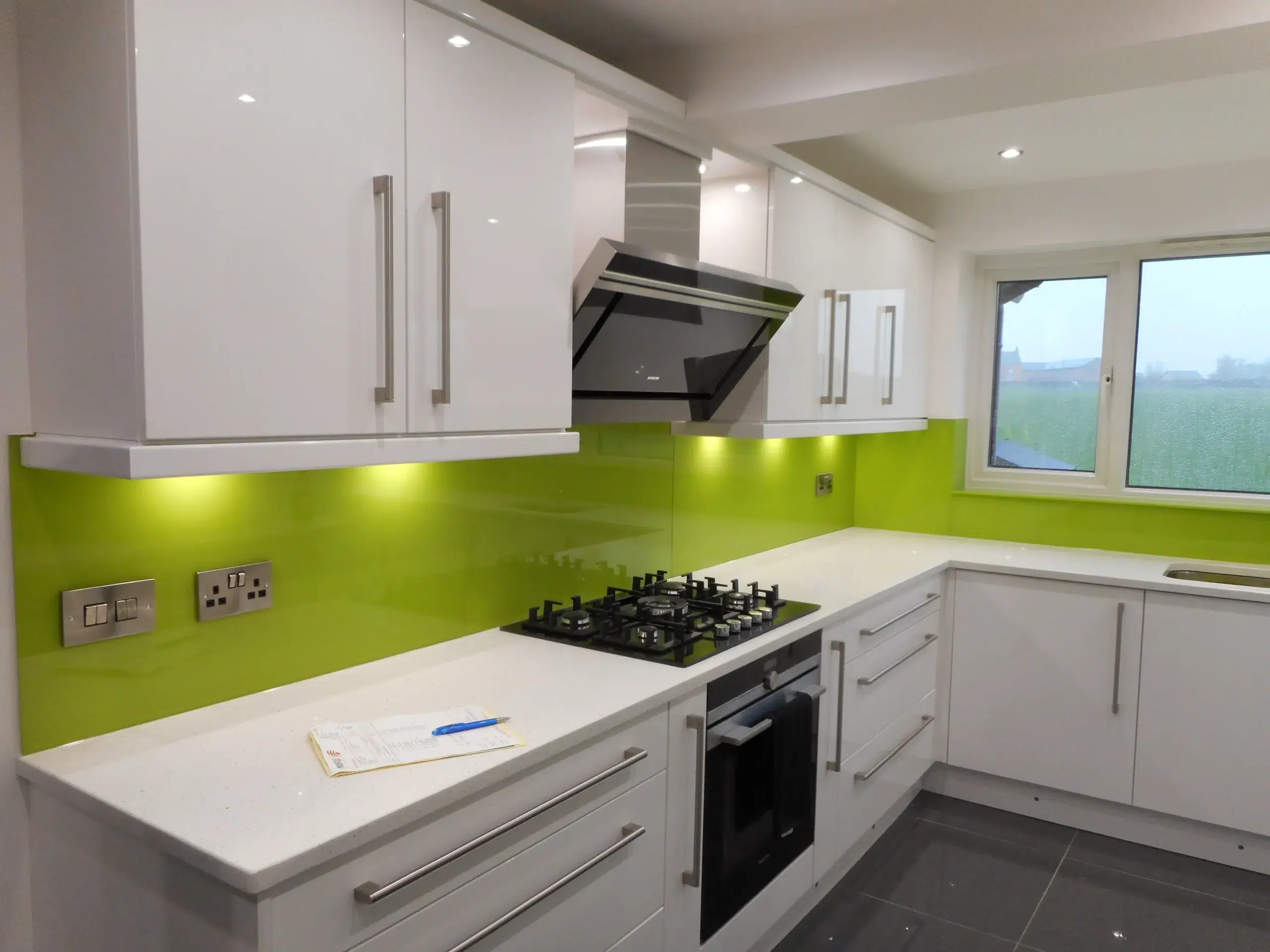
A splashback is an important feature for the design and functionality of a kitchen. Taking the time to plan and choose the right splashback for your kitchen can make your new space a cohesive room for cooking and socialising.
A splashback is a protective covering that stops splashing liquids, oil or grease, and food from staining or damaging a wall. Splashbacks are usually made from a tough, heat-resistant and easily cleanable material.
Kitchen splashbacks can most often be found behind cookers, hobs and sinks, but they can also be used in other areas as a design feature. Running a backsplash behind worktops can create an elegant line across the entire space, while wrapping a chimney breast with a splashback can be a statement feature in the room.
Splashbacks can also be added to secondary spaces such as dining rooms, bar areas or utility rooms to create a more cohesive design throughout a home.
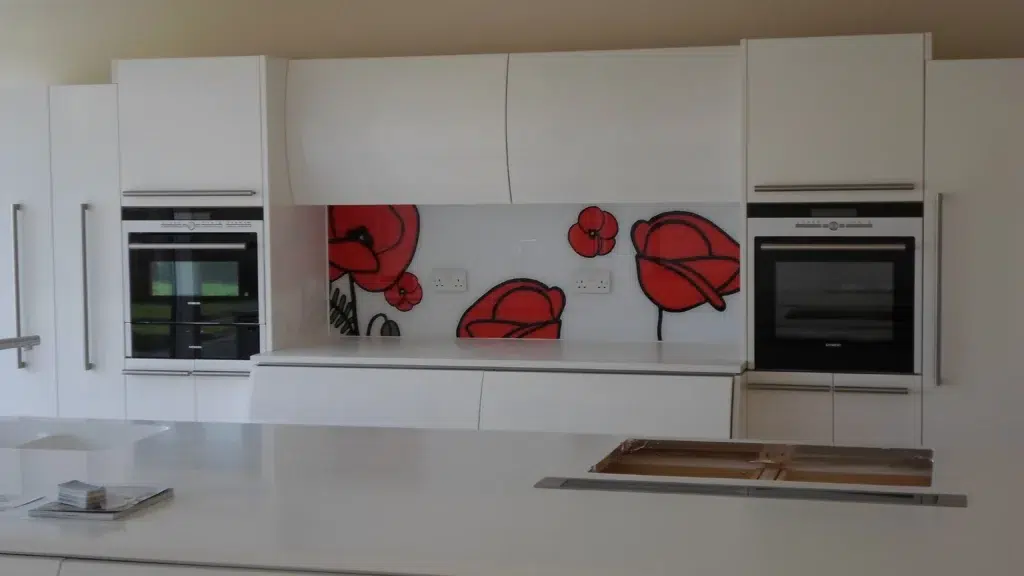
Choosing a kitchen splashback shouldn’t be left until the end of your new kitchen installation. Start thinking about ideas for your kitchen splashback in the design and planning phase to make sure that your choice works as part of the entire space.
Deciding what kind of splashback to choose can be influenced by a range of different factors such as how the kitchen will be used, the style, size and colour of the space, and what materials will best suit the lifestyle of your kitchen.
How you use your kitchen may influence the type of splashback that you choose. If your kitchen is a high traffic area that gets a significant amount of use, then you might choose to prioritise materials that are easy to clean and maintain. If your kitchen is the focal point of the house, aesthetic design might be the priority for you.
Think about where the hardest-working areas of your kitchen are, what type or how much cooking you prefer to do, and how much time you’re willing to spend on cleaning and maintenance. The right splashback should fit into your daily life rather than require you to change your habits.
Kitchen splashbacks are made from heat-resistant, durable materials, but there are lots of different options to choose from. While it can be tempting to think about the style and design first, the material of your splashback will have more of an influence on how you actually use, clean up, and live in this space.
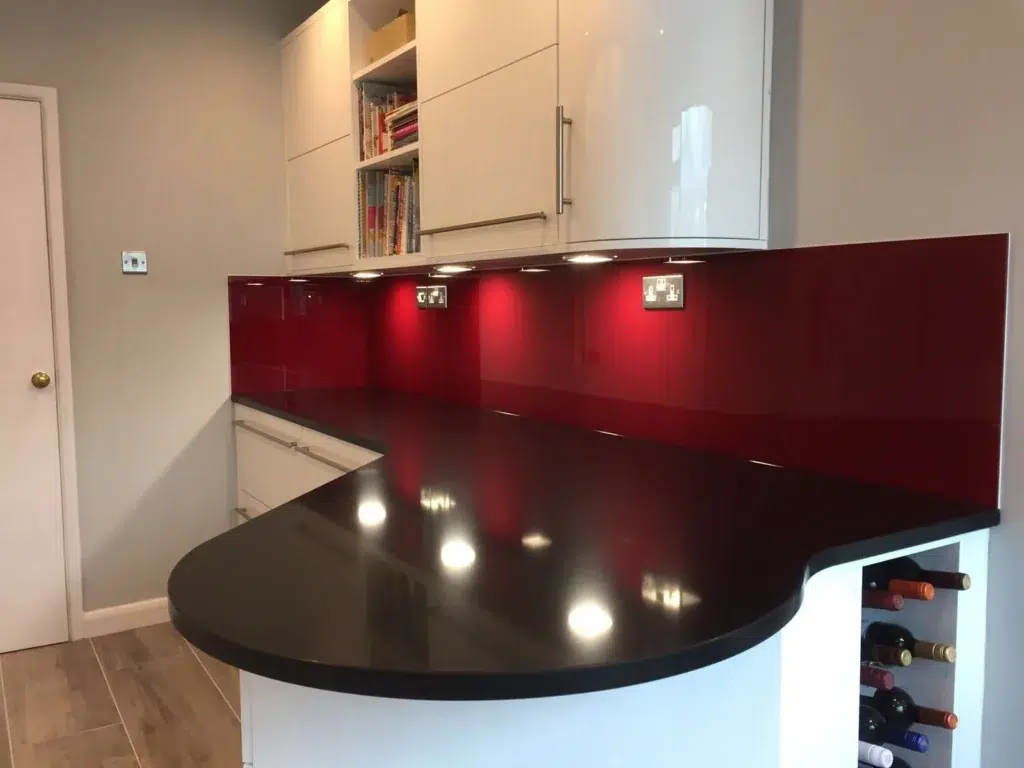
Made from toughened safety glass, a glass splashback can handle the high heat and temperature changes behind hobs without warping or cracking. Glass splashbacks are often installed in one piece, so are easy to clean and are resistant to staining, mold or mildew. Glass splashbacks are available in a variety of different designs, so make an excellent choice for any space.
Kitchen backsplashes are also easier to clean than tiles – there are no grout lines, plus the smooth surface of the splashback can be wiped down quickly. A glass backsplash design is a good option if you want a backsplash that is particularly easy to look after.

Ceramic and porcelain tiles are made to withstand high heat, are glazed to prevent trapping moisture, and easy to clean. If a single tile chips or cracks it can be easily replaced without replacing an entire splashback, however some grouts may become stained or need to be replaced over time. Tiles are available in endless colours, shapes and patterns, which makes them a good design choice.
Metal is even more resistant to heat than glass or tile, can be installed in one sheet, and is easy to clean. Metals reflective properties can add the illusion of space to smaller kitchens, and different types of metal can offer different design qualities. However, polished or glossy finishes can show up grease marks or fingerprints easily and may require more upkeep.
Acrylic splashbacks are a cost-effective option that is lightweight, flexible, and can be easily installed. Acrylic is non-porous and easy to clean, and is available in a wide range of designs. However, acrylic can warp or melt when exposed to high heat, and it is recommended that acrylic is not used within 200mm of a cooker or hob.
Stone, quartz or granite splashbacks are a luxury finish. These splashbacks are extremely durable and heat-resistant, but some materials such as granite need regular maintenance to keep the finish sealed and non-porous. Luxury finishes are an investment, but they are an elegant design choice that won’t go out of style.

When thinking of ideas for kitchen splashbacks, the aesthetics are the thing that people think about first. Choosing a splashback in a style that fits your kitchen and wider home will create a finished space that works cohesively with your entire house. Because new kitchens, upgrades, or decorating can be expensive, many people choose a style that will last. However, a splashback can be changed out more easily than a fitted kitchen, so you might be able to go out of your comfort zone without worrying!
Contemporary kitchen design focuses on clean lines, open-plan layouts, and minimalist fittings and decor. Soft, neutral colours such as warm greys, beige, or taupes are often combined with pops of bold accent colours. Modern splashbacks work well in this kind of design, with glass splashbacks offering neat, clean edges. Coloured glass splashbacks can give contemporary kitchens a bright area in an otherwise neutral-coloured space.
Warm colours, natural materials, and texture are the main elements of a country-style kitchen. Adding a tile splashback can add another layer of colour and texture into your space. The effect of smaller tiles in a colour that contrasts with the cabinetry and worktops will help to create the relaxed, lived-in feeling that country-style kitchens focus on.
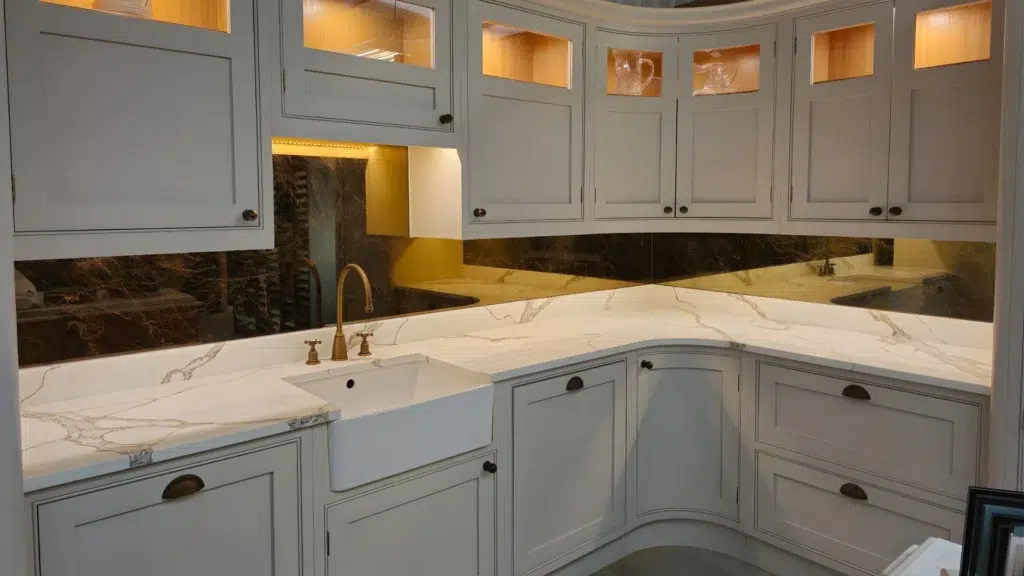
Industrial-style kitchens use raw materials and exposed structural elements to create a rugged, modern design. Colours such as deep greys and blacks, mixed with ashy-coloured wood, warm brick, and metallic brass or copper accents soften that industrial feeling. Adding a clear glass splashback over exposed brick, or an antique mirrored glass splashback will enhance these core design elements while still protecting your kitchen from cooking mess.
Create a calm space with clean lines, neutral colours, and hidden storage for a minimalist kitchen. Adding a splashback in a similarly toned colour to the cabinetry will give an uncluttered visual field, while splashback materials like glass or acrylic will create those clean lines.
Colourful kitchens use bold colour choices in paint, hardware, flooring or tiles to move away from neutral or plain designs. Popular colour palettes for colourful kitchens can include earthy palettes, soft pastels, rich jewel tones, or vibrant primary colours. Using tiles to add pattern or printed glass splashbacks to add colour can give a new dimension to a kitchen space.
Having a smaller kitchen space can come with restrictions, but your splashback can actually help to make a small space feel more open. Adding reflective materials like a metal or mirrored glass splashback, introducing lighter colours, or extending a splashback across an entire wall are all techniques to consider when you want to make the most of your kitchen space.
Profile Glass specialises in creating bespoke glass splashbacks in custom colours that are made-to-measure for a perfect fit. Visit our showroom to see stylish examples of our workmanship, or get in touch to start bringing your kitchen backsplash ideas to life.
We’ll send you the latest version of our brochure.